 St Mary's Church, Dymock
| Admin | |||
| . | Home | Contents | |
| H&S Policy | People Safety | Grave Yard | |
The Church & The World
Faith & Care
Faith & Care
Things Past
People & Features
People & Features
Picture of
Tympanum TBA
The porch, parts of the chancel and north wall date from the original building on this site. The square-set Norman doorway has a simple tympanum showing a boldly carved 'Agnus Dei' (Lamb of God) carved in stone. That lamb, with its right forefoot, holds a Maltese cross instead of the usual flag and faces east. There are only two other similar tympana in Gloucestershire - at Upleaden and at St Mary de Crypt, Gloucester. It's said by some to be of Saxon workmanship and it's possible that it was saved from the old church.Tympanum TBA
A window in the south wall has some remains of fourteenth century glass showing part of a crucifix and the figures of St. John and St. Mary. The stained glass was not painted as was the later method, but colours were melted into the glass as it was being made.
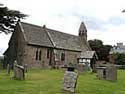
Restoration and Enlargement
.
The copper weathercock blew down some years ago and was found to be over a hundred years old and weighed 16.5 lbs (7.5kg)
.
Although Preston belonged to St. Peter's Abbey of Gloucester from Saxon times, it was in the diocese of Hereford until the abbey was dissolved at the Reformation and St. Peter's became the cathedral church of the new diocese of Gloucester. (Return to Top)
Memorials

John Masefield
.
On the north side of the side aisle is a faded memorial to Richard Rich, probably Anne's son. He was known locally as a scholar of some distinction.
.
The stained glass window on the west wall is in memory of Robert Churchill who was killed in the war. Preston Court was leased from the church until it was sold in the mid 20th Century.
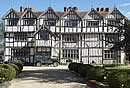
Preston Court
.
In 1585, the Manor of Preston was held by Queen Elizabeth and was leased to Fulke Greville Esq for eighty-nine years. He was Treasurer of the Navy and secretary to the Council of the Marches of Wales. In 1604, John Powell lived at Preston Court. He was Fulke Greville's agent in his office of Secretary to the Council. John Powell had several children - Mary who married John Coke, William (1590-1618), Eleanor who married a Mr James and Elizabeth (1598-1619). He died in 1632 and he, together with William and Elizabeth, are buried in the church chancel.
.
Next to occupy Preston Court was Anne Robbins. She was the wife of Thomas Rich, Alderman of Gloucester and afterwards the wife of Henry Robbins, Counsellor-at-law. There is a handsome monument to her on the north wall to the right of the door. It shows her head carved in stone with angels on either side and the coat of arm of her own and her husband&'s family above. Below is a long inscription giving a history of her marriages. (Return to Top)